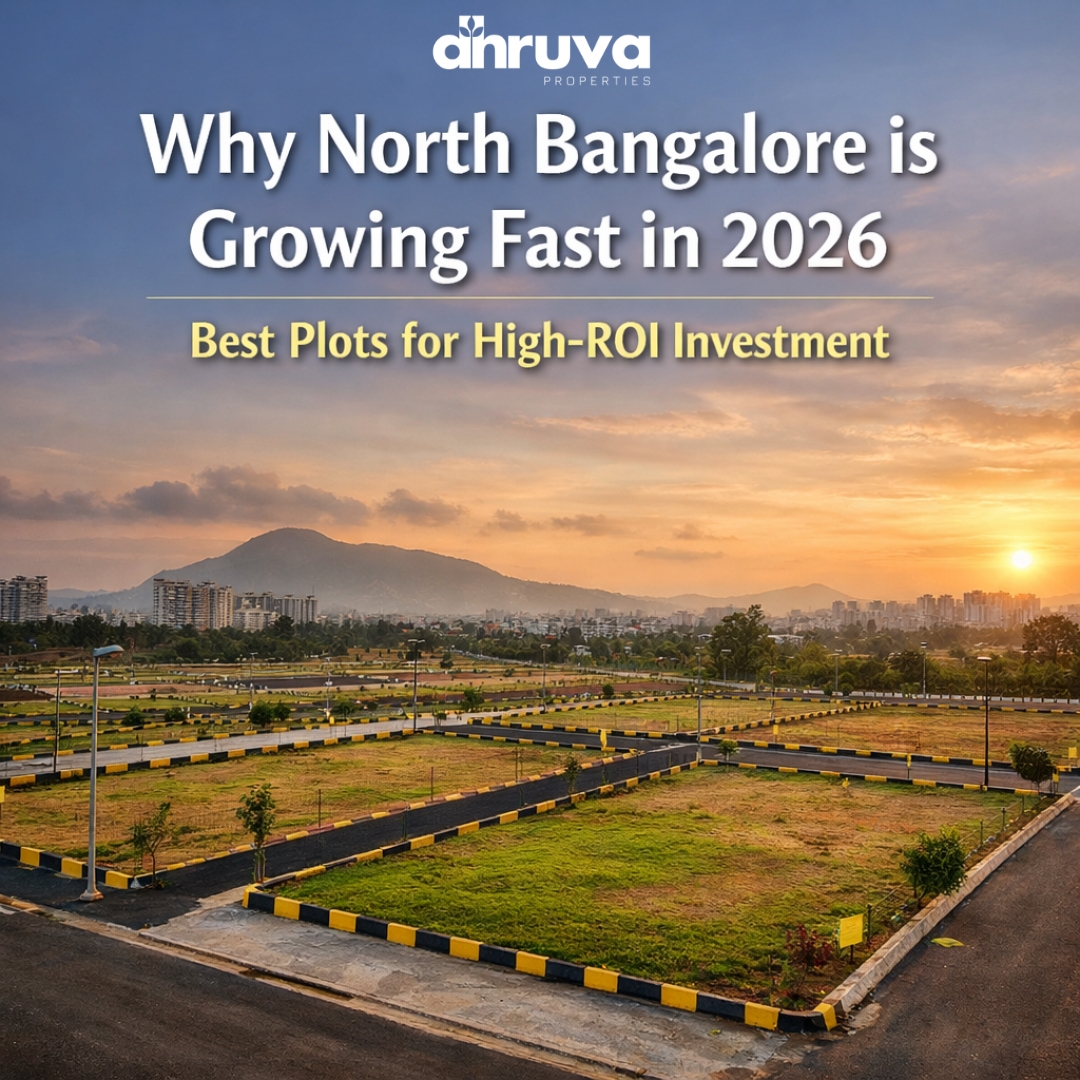
The North Bengaluru Land Boom 2026: Why Bangalore's Northern Corridor is 2026's Smartest Land Play

The Northern Awakening
There's a pattern smart investors recognize: affordable land near major metros, combined with confirmed infrastructure projects, creates explosive wealth. Gauribidanur, a taluk in Chikkaballapur district, is hitting this sweet spot perfectly in 2026.
Just 70 kilometers from Bangalore and roughly 87 kilometers from Kempegowda International Airport, Gauribidanur has been flying under the radar. But that's changing fast. The convergence of suburban rail connectivity, industrial development, and government-backed infrastructure upgrades is rewriting this region's economic future.
The Suburban Rail Game-Changer
Karnataka's Minister for Commerce and Industries proposed expanding the suburban railway system to connect nearby cities including Gauribidanur, marking a pivotal moment for the region. While two suburban rail corridors are expected to be operational by December 2026, discussions are underway for future extensions that would link Gauribidanur directly to Bangalore's growing suburban network.
This isn't just about trains. It's about accessibility transformation. When suburban rail reaches an area, commute times to employment centers drop dramatically. Suddenly, living 70 kilometers from Bangalore becomes viable for thousands of professionals and families. The land that's considered "too far" today becomes "perfectly positioned" tomorrow.
The Bangalore Suburban Rail Project (BSRP), expected to carry 9.84 lakh passengers daily once completed, represents a fundamental shift in how the Bangalore metropolitan region functions. Gauribidanur's inclusion in expansion discussions positions it as part of this transformation rather than outside it.
Strategic Location: The Airport Advantage
Geography matters in real estate, and Gauribidanur's position is increasingly valuable. Located within reasonable proximity to Kempegowda International Airport (approximately 87 kilometers), the area benefits from airport-adjacent growth patterns without carrying airport-zone premium pricing.
As Bangalore continues its aggressive expansion northward, corridors connecting to the airport become natural development paths. Industrial parks, logistics facilities, and residential communities follow these routes. Gauribidanur sits along this trajectory, positioned to capture spillover growth from both Bangalore city and airport-area development.
The existing road and rail connectivity to Bangalore (about 70 kilometers) already makes the area accessible, with travel times of approximately 1.5 to 2 hours by road or train. As infrastructure improves, these times will decrease, further enhancing the location's appeal.
Government Investment and Local Development
Recent infrastructure initiatives demonstrate growing government focus on the region. In October 2025, Gauribidanur's MLA inaugurated a ₹3 crore road construction project, emphasizing rural development priorities and infrastructure improvements. While individual projects may seem modest, they signal a broader pattern of investment and attention.
Road development, utility upgrades, and basic infrastructure enhancements lay the groundwork for larger-scale development. These improvements make the area more attractive for residential development, commercial activities, and industrial investments. The government's commitment to addressing infrastructure gaps removes key barriers to growth.
Additionally, discussions around industrial area development in the region and proposed educational institutions (including university proposals) indicate planning for long-term economic diversification beyond agriculture.
Current Market Reality: The Affordability Window
What makes Gauribidanur particularly compelling is the current pricing landscape. While Bangalore's core areas command astronomical premiums and even peripheral zones like Devanahalli carry hefty price tags, Gauribidanur remains remarkably affordable.
Current land prices show significant variation based on location and conversion status:
Agricultural land ranges from approximately ₹29 lakhs to ₹62 lakhs per acre, depending on specific location, road access, and proximity to developed areas.
Residential plots are available from roughly ₹800 to ₹1,500 per square foot, with many developments offering plots in the ₹10-21 lakh range for standard 1200-2400 square foot parcels.
Converted land with proper documentation and approvals commands premium pricing but remains a fraction of similar properties closer to Bangalore city.
This affordability creates the entry point. Once infrastructure materializes and connectivity improves, these baseline prices will reset upward. The investors who position themselves during the affordability window typically see the strongest returns.
Investment Considerations and Due Diligence
Smart investing in emerging areas requires careful evaluation beyond just infrastructure promises. Here's what matters in Gauribidanur:
Documentation is everything. Verify land conversion status, ensure clear titles, and confirm approvals from relevant authorities (DTCP, A-Khata documentation). Many developments advertise government approvals—verify these independently.
Location within Gauribidanur matters. Proximity to the existing railway station, distance from state highways, and access to Bangalore-bound routes significantly impact both current utility and future appreciation potential.
Infrastructure timeline uncertainty is real. While suburban rail expansion discussions are promising, actual implementation timelines can extend beyond initial projections. Don't invest based solely on speculative timelines.
Water availability and existing utilities vary across the area. Properties with reliable water sources and power connectivity carry immediate value advantages.
Existing developments like Sancity Gardenia and other established projects indicate private sector confidence and provide benchmarks for market pricing and amenities.
Why 2026 Matters
The next 12-24 months represent a critical window. As suburban rail discussions progress toward concrete plans, as government infrastructure investments continue, and as Bangalore's growth inexorably pushes northward, awareness of Gauribidanur will increase.
Early movers benefit from lower entry costs, wider selection of prime parcels, and maximum appreciation potential. Once mainstream attention arrives—once the first major developers announce projects or the first corporate parks break ground—the affordability window closes.
This pattern has repeated across Bangalore's periphery. Devanahalli was once considered too far. Whitefield was farmland. Sarjapur was a village. Each transformation followed the same script: infrastructure announcements, early investor positioning, gradual development, then explosive mainstream recognition.
Gauribidanur is early in this cycle. The infrastructure catalysts are aligning. The government commitment is visible. The private sector is beginning to notice. The market hasn't fully priced in the transformation yet.
Your Action Plan
If Gauribidanur's investment thesis resonates with you, here's how to proceed intelligently:
Research first, commit later. Visit the area multiple times. Understand the geography, see existing infrastructure, and evaluate actual connectivity versus promotional claims.
Connect with local authorities. Visit the Gauribidanur town planning office to understand approved layouts, conversion applications, and upcoming government projects.
Evaluate multiple options. Don't rush into the first attractive offering. Compare agricultural land, converted plots, and established developments. Each carries different risk-reward profiles.
Consider holding period. Infrastructure-driven appreciation typically unfolds over 3-7 years, not months. Ensure your investment timeline aligns with realistic development horizons.
Start with what you can afford to hold. The best infrastructure investments are those you can hold patiently while the transformation materializes.
The land boom in Gauribidanur isn't about hype or speculation. It's about recognizing fundamental drivers—connectivity improvements, government investment, strategic location—before the market fully prices them in. Those who position thoughtfully during 2026 are positioning for the Gauribidanur of 2030 and beyond.